

Can I Replace an Open Fire With a Wood Burning Stove?
20th Sep 2026
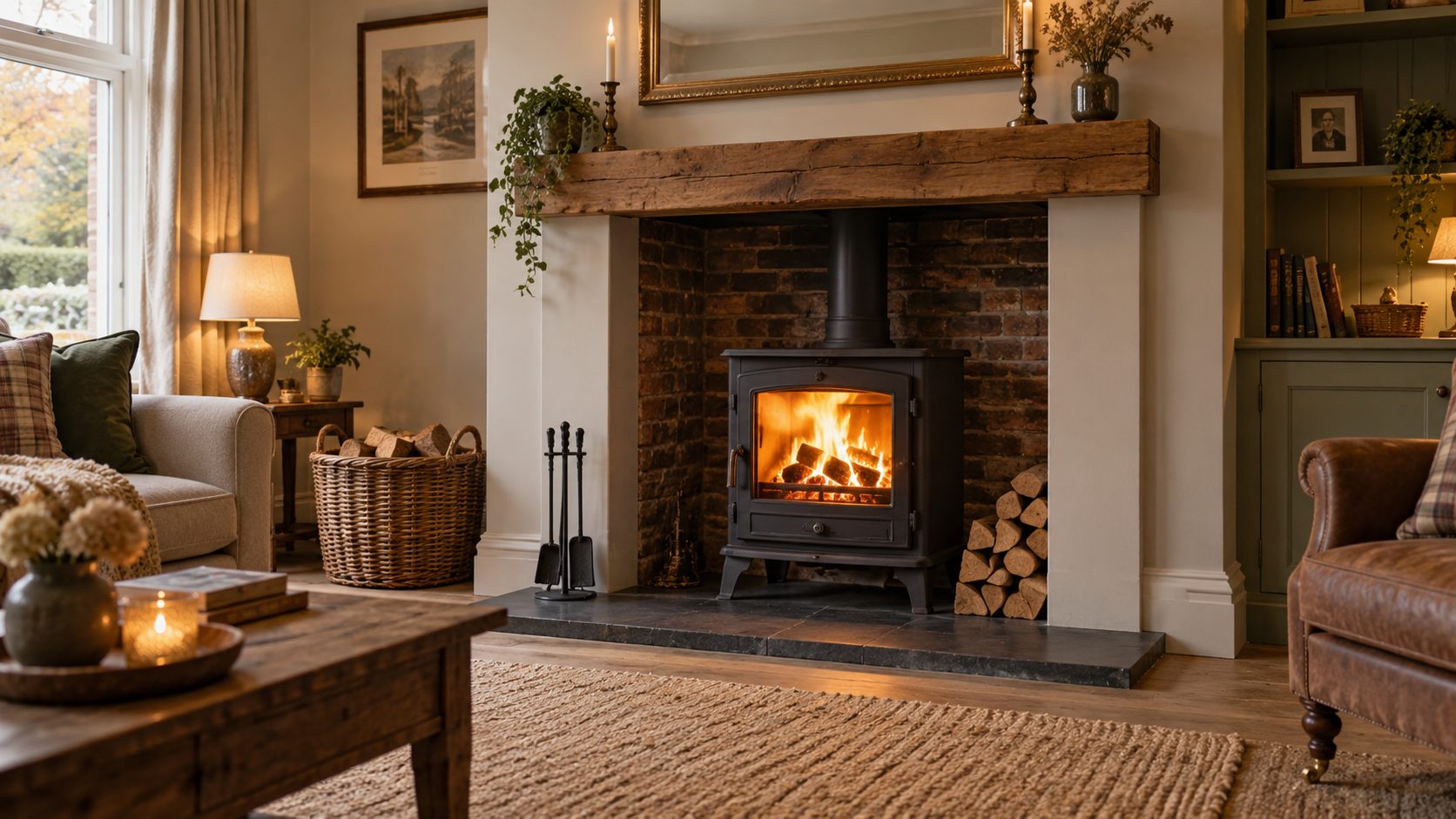
An open fireplace can be a beautiful feature, but many homeowners eventually start looking for something that offers greater control, a cleaner appearance and more useful heat. One of the most common questions is whether an existing open fire can be replaced with a wood burning stove.
In many homes, the answer is yes. An existing fireplace and chimney can provide a very good starting point for a stove installation, but the opening, chimney, flue, hearth and ventilation all need to be assessed before a suitable appliance is chosen.
The important point is that this is not simply a case of placing a stove into the old fireplace opening. A professional survey should establish whether the existing structure is suitable, what preparation may be required and which stove will work safely and effectively in the room.
Can an existing fireplace be converted for a wood burning stove?
In many cases, an existing open fireplace can be adapted to accommodate a wood burning stove. Traditional chimney breasts and fireplace openings are often well suited to this type of project because there is already a route for combustion gases to leave the property.
However, every installation is different. Older fireplaces may have been altered, blocked up, reduced in size or fitted with previous appliances. The condition and dimensions of the chimney also need to be considered.
A site survey is therefore one of the most valuable first steps. It allows the installer to look beyond the appearance of the fireplace and assess the parts of the system that will determine whether the proposed installation is appropriate.
What needs to be checked before replacing an open fire?
The chimney and flue
The chimney is one of the most important parts of any wood burning stove installation. It needs to be suitable for the appliance, clear of obstructions and capable of safely carrying combustion gases outside.
An existing chimney should be inspected before installation. Depending on its condition, construction and the requirements of the chosen stove, remedial work or a suitable liner may be recommended.
It is also important to remember that a chimney which appeared to work adequately with an open fire is not automatically suitable for a modern closed appliance. The stove manufacturer’s installation instructions and the requirements applying to the property need to be followed.
The fireplace opening
The existing opening must be large enough to accommodate the stove while maintaining the required clearances around the appliance. Those clearances vary between stove models, so choosing the appliance before finalising alterations to the fireplace is important.
Some homeowners choose to keep the original opening and create a traditional inglenook-style installation. Others enlarge, reshape or reline the chamber to create a cleaner contemporary finish. The right approach depends on the property, the stove and the look you want to achieve.
The hearth
A stove needs an appropriate non-combustible hearth. An old fireplace may already have a substantial hearth, but that does not automatically mean it meets the requirements for the new appliance.
The installer will check its dimensions, construction and position in relation to the stove. If the existing hearth is unsuitable, it can often be replaced or extended using materials such as slate, stone, glass or other approved non-combustible finishes.
Ventilation and air supply
A wood burning stove needs an adequate supply of air for combustion. The amount of permanent ventilation required depends on factors including the appliance and the property.
Modern homes and extensively renovated properties can be particularly airtight, so ventilation should never be treated as an afterthought. A competent installer can assess the room and advise whether additional air provision is required.
Does the chimney always need to be lined?
No. Replacing an open fire with a stove does not automatically mean that a chimney liner must be fitted.
Whether lining is needed depends on the condition, construction and size of the existing chimney, as well as the requirements of the appliance being installed. A sound chimney that is suitable for the stove may not need the same work as an older chimney with defects, excessive dimensions or leakage.
This is why it is better to have the chimney assessed rather than assuming that every conversion will involve the same specification or cost.
What type of stove works in an existing fireplace?
There is a wide choice of wood burning stoves for traditional fireplace openings, from compact cast-iron models to clean-lined contemporary designs.
A freestanding stove positioned within the opening is a popular choice because it allows the stove itself to become the focal point. An inset stove may be appropriate where a more integrated appearance is preferred and the fireplace construction is suitable.
Heat output matters just as much as appearance. A stove that is too large for the room can be uncomfortable and may encourage poor operating habits, while an undersized appliance may not provide the level of heat expected. Room size, insulation, ceiling height and glazing should all be considered when selecting the stove.
Why replace an open fire with a stove?
For many homeowners, the main appeal is the combination of atmosphere and practicality. A closed wood burning stove gives greater control over the burn than an open fire and can make better use of the heat produced.
It can also transform the appearance of a tired fireplace. Retaining an original chimney breast while introducing a well-proportioned stove allows period character and contemporary performance to work together.
There are practical benefits too. Logs are contained within the firebox, the flame can be viewed through the stove glass and the appliance can become a strong focal point even when it is not in use.
What does the conversion process usually involve?
The exact process varies, but a typical project may include a survey, selecting the correct stove, preparing the fireplace opening, checking or improving the chimney, installing or adapting the hearth, fitting the stove and flue connection, and commissioning the finished installation.
Work involving a solid-fuel appliance must comply with the relevant Building Regulations and manufacturer instructions. Using a suitably registered and experienced installer also means the installation can be assessed as a complete system rather than as separate pieces of equipment.
At Manor House Fireplaces & Stoves, our installation service begins with understanding the room, the existing fireplace and the type of result you want to achieve before recommending a suitable route forward.
What if my home is in a Smoke Control Area?
Being in a Smoke Control Area does not necessarily prevent you from installing a wood burning stove. It does, however, affect the appliance and fuel choices that may be appropriate.
Where Smoke Control Area rules apply, homeowners should make sure that the stove and fuel are suitable for use under the relevant requirements. This is another reason to choose the appliance with professional advice rather than buying a stove first and investigating the installation afterwards.
Plan the fireplace and stove together
The best conversions treat the fireplace, stove, hearth and chimney as one complete design. The proportions of the opening, the finish inside the chamber and the style of the hearth can make as much difference to the finished room as the stove itself.
Visiting a showroom is useful because photographs do not always show the true scale of an appliance. Seeing different models in person can help you compare door size, proportions, controls and finishes before deciding what will work in your own fireplace.
Manor House Fireplaces & Stoves has a large showroom in Kenilworth with wood burning stoves, fireplaces and working appliances on display. Our team can help you explore the options and arrange a home survey where required.
Frequently asked questions
Can I put a wood burner into any existing fireplace?
Not automatically. The fireplace opening, chimney, hearth, ventilation and clearances all need to be suitable for the proposed appliance. A survey is the best way to establish what work is required.
Can I keep my existing fireplace surround?
Often, yes, provided the surround and nearby materials are suitable for the installation and the required distances from the appliance can be achieved. This should be assessed as part of the design and survey.
Should I choose the stove before altering the fireplace?
Ideally, yes. Different stoves have different dimensions, heat outputs and clearance requirements. Selecting the appliance first helps ensure that the fireplace opening and hearth are prepared to suit the final installation.