


Replacing an Old Gas Fire: What Are Your Options?
20th Sep 2026
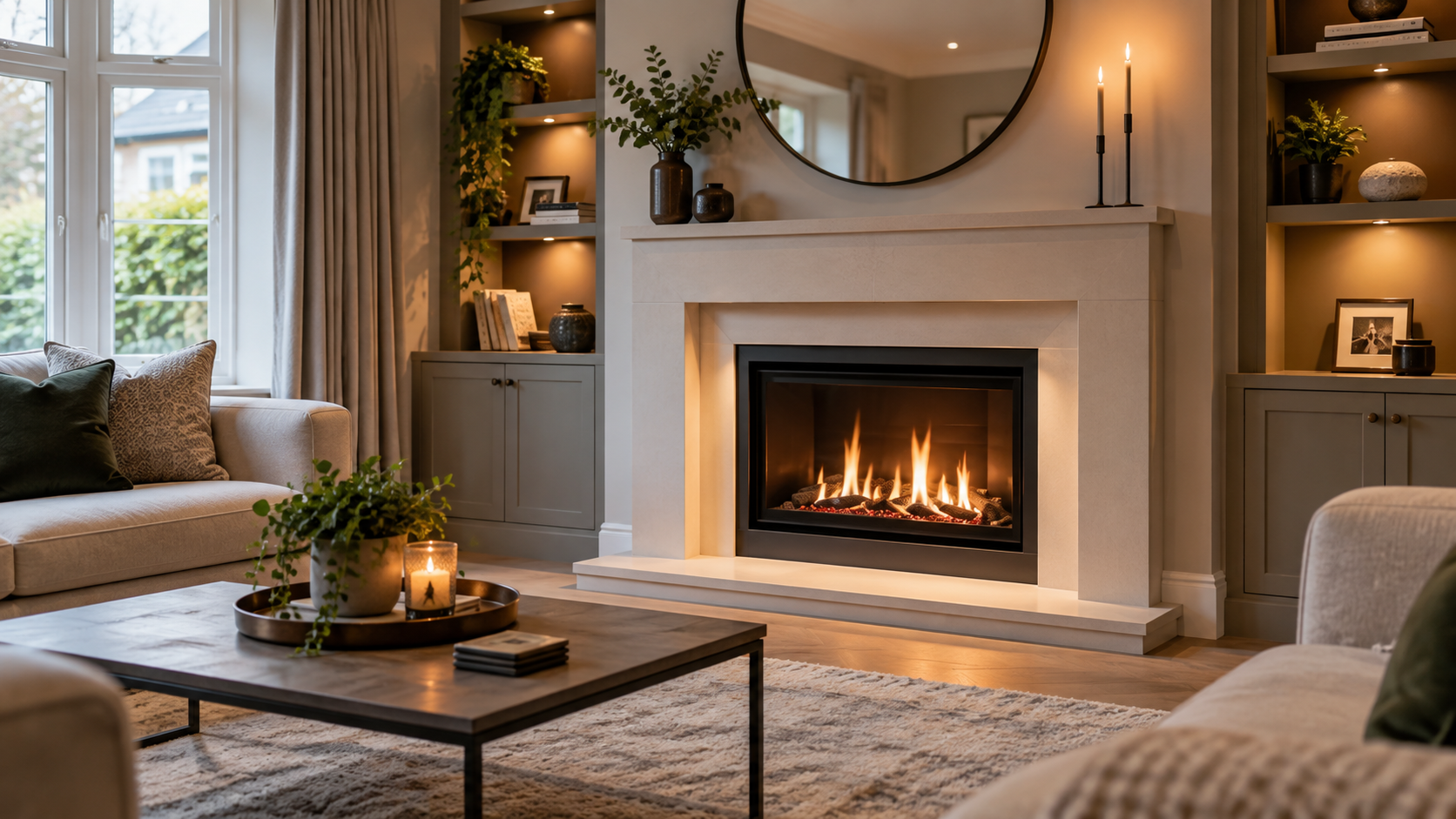
An older gas fire can continue to work for many years, but there often comes a point when homeowners want better controls, a different style or a completely new look for the room. In other cases, an ageing appliance may no longer suit a renovation, or replacement parts and servicing considerations may prompt a wider rethink.
The good news is that replacing an old gas fire does not mean you have to install another version of exactly the same thing. Depending on the property, chimney or flue arrangement and the look you want to achieve, there may be several practical routes to consider.
From modern gas fires and balanced flue designs to electric fires and stoves, the right replacement starts with understanding what is already in the room and what you want the new fire to do.
When should you consider replacing an old gas fire?
Replacement is often driven by design rather than failure. A fire that looked right twenty years ago may feel dated after a living-room renovation, while modern controls and flame effects can make a new appliance more convenient to use.
You may also be reviewing the fire because of servicing issues, changes to the fireplace surround or a plan to remove the chimney breast appearance altogether.
If there are signs that an existing gas appliance is not operating correctly, it should not simply be swapped on a DIY basis. Gas work must be carried out by a suitably qualified Gas Safe registered engineer. If you are unsure about the condition of the current fire, arrange a professional inspection before making decisions about the replacement.
Option 1: Replace it with a modern inset gas fire
For homes with a traditional fireplace opening, a new inset gas fire can be the most straightforward visual replacement. Modern designs range from classic coal- or log-effect fires with decorative trims to cleaner, contemporary models.
This route can work particularly well when you want to retain an existing fireplace surround and maintain the familiar proportions of the room.
However, the fact that an old gas fire fits the opening does not guarantee that any new model will. The chimney or flue type, ventilation, opening dimensions and manufacturer requirements all need to be checked before a replacement is selected.
Option 2: Choose a balanced flue gas fire
A balanced flue gas fire can open up different design possibilities, particularly in homes where a conventional chimney is not available or where a room-sealed appliance is preferred.
Balanced flue appliances use a dedicated flue arrangement to bring in combustion air and discharge combustion gases. Depending on the model and property, this can make them suitable for modern installations that would not work with a traditional open-flued gas fire.
They are available in a wide range of formats, including built-in contemporary fires and gas stoves. Because the flue route is central to the installation, it is important to consider the appliance and its position together rather than choosing solely from a photograph.
Option 3: Replace the gas fire with an electric fire
For many homeowners, switching from gas to electric is one of the most flexible replacement options.
Electric fires do not need a chimney or combustion flue, so they can work in spaces where a gas or solid-fuel appliance would involve more structural considerations. Depending on the design, an electric fire may be fitted into an existing fireplace opening, used as part of a complete suite, mounted on a wall or integrated into a media wall.
Modern electric fires are also designed to provide a flame effect independently of the heater on many models, allowing the visual feature to be enjoyed throughout the year.
If an old gas appliance is being removed, the gas supply must still be made safe by an appropriately qualified professional. The electrical requirements of the new fire should also be considered as part of the installation plan.
Option 4: Consider a gas stove
If you like the appearance of a wood burning stove but prefer the convenience of gas, a gas stove can offer an attractive middle ground.
Gas stoves are available in traditional and contemporary designs and can create a strong focal point within a fireplace opening or other suitable position. Balanced flue versions may provide additional flexibility where the property does not have a conventional chimney suitable for the chosen appliance.
This can be a particularly effective way to update a room while keeping the instant control that makes gas appealing.
Option 5: Change to a wood burning stove
In some properties, replacing a gas fire with a wood burning stove may also be possible.
This is a more significant change because the chimney, hearth, fireplace opening, ventilation and clearances must all be suitable for a solid-fuel appliance. The existing gas installation also needs to be safely disconnected.
For homeowners who specifically want the character and operation of a real wood fire, it can be a rewarding option, but it should begin with a survey rather than with the purchase of a stove. The installer can then establish what alterations are required and whether the proposed appliance is appropriate for the room.
Do you need a chimney for a replacement fire?
Not necessarily. One of the biggest changes in fireplace design is the range of products available for homes without a traditional chimney.
Some gas fires require a suitable chimney or flue, while balanced flue models use their own dedicated system. Electric fires do not require a combustion flue at all.
This means that a blocked chimney, removed chimney breast or modern property does not automatically rule out creating an attractive fire feature. It simply changes which products are suitable.
Can you keep the existing fireplace surround?
Often, but not in every case.
A marble, stone or other fireplace surround may be perfectly capable of forming part of the new design, provided it is compatible with the proposed appliance and installation. In other situations, the proportions of the opening or the construction behind the surround may make a new fireplace a better solution.
If you are already redecorating, replacement can also be an opportunity to rethink the entire focal point rather than limiting the new appliance to the dimensions of the old one.
Think about heat, appearance and everyday use
It is easy to choose a replacement fire based on appearance alone, but the best option should work for the way you use the room.
Consider whether the fire is expected to provide regular supplementary heat or is mainly a visual focal point.
Think about how quickly you want heat, how much maintenance you are comfortable with, whether you want remote or smart controls, and how the fire will sit alongside the television, furniture and fireplace surround.
A large open-plan living area may have very different requirements from a compact lounge, even if the two rooms use similar-looking products.
Gas fire replacement should be professionally assessed
Any work on a gas appliance or gas fitting must be carried out by a suitably qualified Gas Safe registered engineer. That includes work such as removing, disconnecting, fitting or reconnecting a gas fire.
A professional survey can also identify the existing flue arrangement, assess the fireplace opening and help establish which replacement products are realistic before decorating or building work begins.
Manor House Fireplaces & Stoves provides a complete installation service, including Gas Safe installations, alongside electric fires, wood burning stoves and fireplaces. This makes it possible to compare different replacement routes rather than being restricted to the same type of appliance you already have.
See the options before you decide
Replacing an old gas fire is a good opportunity to look at the room with fresh eyes. You may decide that a newer gas fire is exactly what you need, but an electric fire, gas stove or wood burning stove could create a very different result.
The Manor House Fireplaces & Stoves showroom in Kenilworth has gas, electric and wood burning appliances on display, allowing you to compare flame effects, proportions and finishes in person. Bring photographs and approximate measurements of your existing fireplace and our team can help you narrow down the options before arranging a survey where required.
Frequently asked questions
Can I replace a gas fire with an electric fire?
Yes, this is possible in many homes. The existing gas fire must be safely disconnected by an appropriately qualified Gas Safe registered engineer, and the electrical installation should be suitable for the new appliance.
Can I replace an old gas fire without changing the surround?
Sometimes. It depends on the dimensions and construction of the existing fireplace and the requirements of the new fire. A survey can establish whether the surround can be retained.
Can I remove a gas fire myself?
No gas work should be treated as a DIY job. Removing or disconnecting a gas appliance is gas work and should be carried out by a suitably qualified Gas Safe registered engineer.